Solitaire Y
- 4.4
- Rating
- 50.00K
- Installs
- Free
- Price
 Analysis by App-foxy
I spent time with Solitaire Y as a simple card game for short breaks, and its appeal became clear almost immediately: it asks very little from me before I can start playing. Developed by HeartsNet, this free title presents itself as a familiar solitaire experience rather than a large, feature-heavy game. That focus is its main strength, but it also defines its limits. If you want a calm way to fill a few minutes, it is easy to understand and comfortable to return to. If you need deep progression, competitive pressure, or a broad collection of modes, you may find it too restrained.
The game is listed for Everyone, which fits the straightforward card format and readable objective. It runs on Android devices using version 7.0 or later, so it can suit people who keep an older phone instead of upgrading regularly. The current version is 1.6.6, and the title has already passed 50 thousand installs. Its average score is 4.4 from more than 200 ratings, a useful sign that the basic experience works for many players, although a rating alone cannot tell me whether it will match your preferred pace.
How Solitaire Y Builds a Reason to Keep Playing
I find the strongest reason to return here is the small satisfaction of making a better decision, rather than chasing a long reward track. That makes it easy to fit a round around shared household routines: one person can play briefly, then hand the device back without needing to preserve a complicated game state. I’d next consider what that casual use means for keeping each person’s play separate.
You May Also Like

 Blood Strike: 2.5 Anniversary
Blood Strike’s Loadouts Turn Every Drop Into a Tactical Gamble
A close look at Blood Strike’s custom loadouts: how fast access to signature weapons reshapes its battle royale rhythm, rewards preparation, and narrows the gap between fights.

 Pandora - Music & Podcasts
Pandora’s Music Is Easy to Start, but Harder to Recover
Pandora’s strength is its low-effort path from a seed to a station. Its weak spot is how much confidence it asks you to place in connection, setup, and quiet recovery.

 8 Ball Pool
 Is Built on Rivalries, Rematches, and Routine
A close look at the rivalries, rematches, shared routines, and unanswered safety questions that turn a quick pool match into a persistent mobile community.

 Samsung Music
’s Quiet Strength Is Playing What You Already Own
Its reach comes less from spectacle than from dependable access to a personal library. That simplicity is both the app’s strongest retention engine and its ceiling.

 AccuWeather: Weather Radar
AccuWeather Review: A Quick, Clear Forecast for Everyday Decisions
For everyday plans, the best forecast is the one you can understand quickly. AccuWeather makes rain timing, radar, and local conditions easy to act on, with a few trade-offs.

 Hill Climb Racing
Why Hill Climb Racing Still Turns Crashes Into One More Run
A tiny car, a bumpy hill and one more upgrade: Hill Climb Racing keeps resurfacing because its simple chaos makes every near-miss feel personal.
More From Our News Desk
View All News


The first goals are immediate rather than elaborate
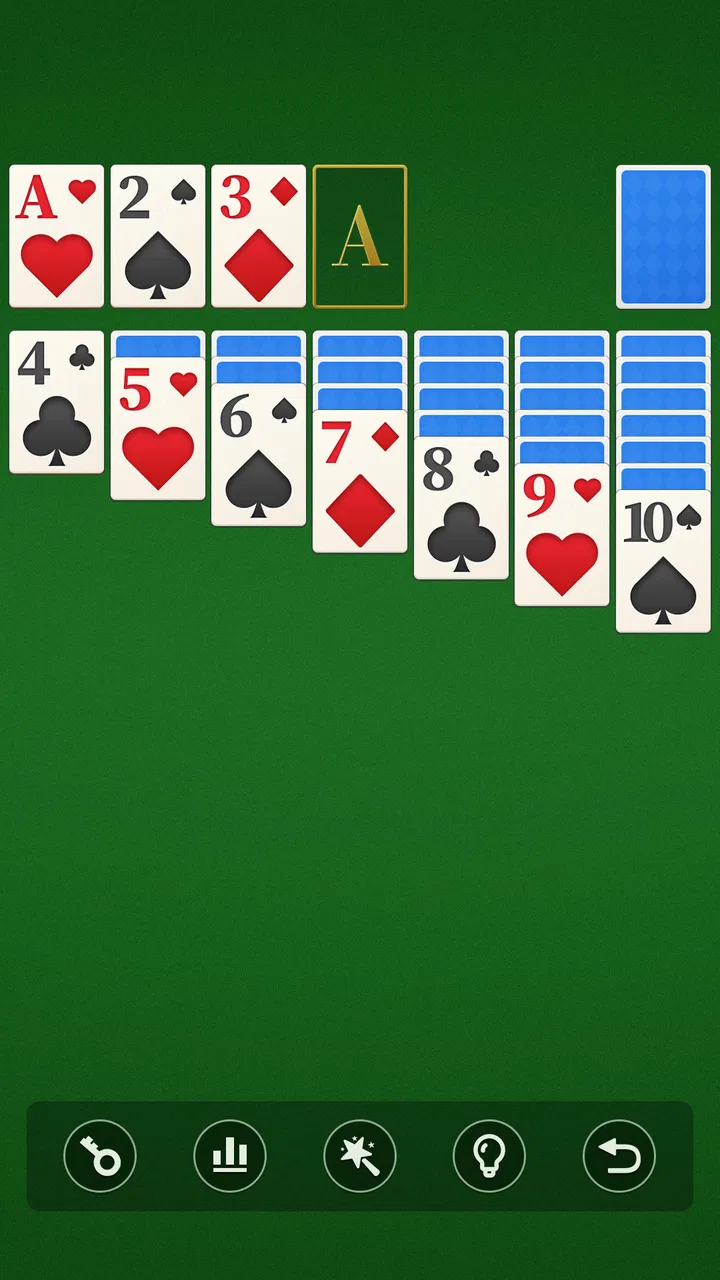
My first impression was that the early goal is simply to understand the board and make sensible moves. That sounds modest, but it is exactly what makes this kind of game approachable. I do not need to learn a story, choose a character, or study a long tutorial before dealing with the cards. The familiar solitaire structure gives me a clear task from the opening hand: reveal useful cards, organize the layout, and work toward clearing it.
That simplicity is particularly useful when I only have a short window of attention. I can open a round while waiting for a drink, during a quiet commute, or between two larger tasks, then stop when the moment ends. The game does not need a long session to make sense. A new player can begin by following the visible card relationships, while an experienced solitaire player can concentrate on planning instead of learning unfamiliar rules.
There is also a practical advantage in starting with such a recognizable format. When I return after a few days away, I do not have to rebuild my understanding of the game. The early objective remains obvious, which makes the app better suited to casual repetition than games that depend on remembering a complicated progression system. This is one of the strongest reasons to recommend it to someone who wants a dependable card pastime rather than a demanding hobby.
At the same time, the lack of a dramatic opening can feel plain. Players who expect immediate rewards, unlockable content, or a sequence of increasingly ambitious tasks may wonder what they are working toward beyond the current deal. Solitaire Y gets me playing quickly, but it does not appear to frame the first sessions as a larger adventure. That is not a flaw for a relaxing card game, though it does mean the motivation comes mainly from the act of solving each layout.
Progress is felt through decisions, not a large reward track
The most meaningful progress signal for me is the changing state of the board. A face-down card becoming available, a blocked column opening, or a carefully timed move creating several new options can feel like a small victory. These moments are subtle, but they give the round a natural rhythm. I can see whether my choices are improving the position without needing a complicated dashboard to explain it.
This kind of progress rewards attention more than speed. I get better by noticing which move preserves flexibility and which move closes off an important route. That makes a second attempt feel different from the first, even when the basic rules stay familiar. The useful lesson is not simply “move any available card”; it is to consider what the move exposes, what it hides, and whether it leaves room for a later correction.
A practical tip I found helpful is to avoid committing to the first attractive move automatically. When two cards appear playable, I look at the one that reveals more of the layout or keeps more columns active. This does not guarantee a winning round, but it makes the decision-making clearer and reduces the feeling that I am moving cards at random. The game works best when I treat each deal as a small planning exercise rather than a race.
Another useful habit is to pause before filling a destination area too quickly. Moving cards away can look like obvious progress, yet the order of those moves can affect what remains available on the main layout. Holding back for a moment lets me inspect the board and choose a sequence with fewer dead ends. This is the sort of small strategic adjustment that the store summary cannot communicate, and it is where the otherwise simple format gains some depth.
What I do not get is a strong sense of long-term advancement. The satisfaction is local to the round: I improved the position, solved the layout, or learned from a mistake. For some people, that is enough. For others, a card game feels more rewarding when every session contributes to a visible collection of achievements, ranks, or unlocks. I would not choose this app expecting that kind of layered progression.
The difficulty curve depends on patience and board reading
Solitaire Y feels approachable because the rules are easy to grasp, but easy rules do not make every deal easy. The challenge comes from recognizing when a move is safe, when it is premature, and when the current layout has become difficult to recover. That creates a gentle curve for beginners: the first challenge is learning the legal patterns, followed by learning how to protect future options.
For a new player, I recommend focusing on exposing hidden cards before chasing every immediately available placement. Revealing information usually gives me more choices, while an attractive move that only rearranges visible cards may not improve the overall position. This approach also makes losses more educational. Instead of blaming the deal, I can look back at the point where I reduced my choices too early.
More experienced players may find the challenge less demanding than in specialist solitaire apps built around many variants or strict scoring goals. Solitaire Y appears designed around accessibility and a calm pace, not around pushing expert players toward increasingly technical play. That makes it a comfortable introduction, but it may not provide enough variety for someone who has already spent years mastering several solitaire formats.
The game is also a better fit for people who enjoy thinking without pressure. I can take a moment to inspect the layout and plan a sequence instead of feeling forced into rapid taps. That slower rhythm supports the relaxing side of the experience. On the other hand, players who enjoy timed rounds or intense score chasing may prefer an alternative that puts speed and performance at the center.
Its pacing supports short sessions, with one important trade-off
The pacing is the clearest reason I could imagine keeping this game installed. A round gives me a contained activity with a beginning, a series of decisions, and a natural stopping point. It does not demand that I reserve an entire evening. This makes it useful for winding down before bed, taking a screen break that still feels interactive, or occupying a few quiet minutes without starting a much larger game.
A realistic example is a lunch break when I have only ten minutes and do not want to get pulled into a social feed. I can open a deal, make a few deliberate moves, and either finish or leave the session without losing the basic appeal of the activity. The card layout gives my attention somewhere specific to go, while the familiar rules keep the mental load low. For me, that is more relaxing than a game that constantly introduces new objectives.
The trade-off is that the same calm design can reduce urgency. There is no obvious need to return immediately, and the game does not seem to rely on a dramatic cliffhanger between sessions. That is positive if I want a hobby that respects my time, but less attractive if I am looking for strong retention pressure. I would rather describe its replay value as voluntary: I return because I enjoy another round, not because the app makes me feel behind.
This also affects how I judge the absence of elaborate unlocks. In a larger card game, unlocks can provide a reason to tolerate repetitive rounds. Here, the main loop has to carry the experience by itself. If the basic solitaire decisions remain satisfying to you, that is enough. If you need new content to keep the game fresh, the restrained structure may start to feel repetitive sooner than a broader card-game collection would.
Who should choose it, and who should look elsewhere?
I would recommend Solitaire Y to someone who wants a free, familiar card game that can be played whenever a small break appears. It is especially suitable for players who dislike complicated onboarding, people using older Android hardware, and anyone who prefers a quiet solo activity over a competitive game. The Everyone age rating also makes its presentation broadly approachable.
I would be more cautious recommending it to players who want multiplayer interaction, a campaign, substantial customization, or a wide range of distinct card modes. Those expectations belong more naturally to a larger solitaire collection or a dedicated competitive card app. Choosing an alternative would also make sense if your main goal is leaderboard competition, because this title’s strongest quality is its relaxed decision-making rather than visible rivalry.
There is a second trade-off involving commitment. Because the game is free, it is easy to try without making a purchase decision, which lowers the barrier to entry. But free card games can be judged harshly when the core loop does not offer enough freshness, and this one depends heavily on whether you already enjoy classic solitaire. I would not install it expecting a completely new interpretation of the genre. I would install it because I want the familiar format presented in an uncomplicated way.
When comparing it with playing solitaire through a browser or using a more feature-packed alternative, I see three different priorities. A browser option may be convenient for a one-off session, while a larger app may offer more modes and long-term goals. Solitaire Y sits between those choices: more immediately personal than a disposable web session, but less ambitious than a full card-game suite. That middle position is sensible, provided you value ease and calm over breadth.
My verdict on goals, unlocks, challenge, and long-term appeal
After using it, I see the progression design as intentionally light. The early goal is clear, the progress signals come from opening the board and improving my decisions, and the difficulty grows through better planning rather than a complicated ladder. That structure keeps the game readable and prevents the relaxing mood from being buried under rewards and notifications.
The downside is equally clear: there is not much evidence of a larger progression journey to pull me through weeks of play. I do not think that makes it unsuccessful. It simply places the responsibility for retention on the solitaire loop itself. Players who enjoy refining their choices can continue finding small improvements, while players who require frequent unlocks may run out of motivation.
My advice is to approach it as a pocket-sized card table, not as a content-heavy game. Use the first few rounds to learn how revealing cards changes your options, slow down when two moves look equally attractive, and judge the app by how satisfying the individual deals feel. That mindset brings out its strengths and avoids expecting systems it was never built around.
Overall, HeartsNet has made a sensible choice by keeping this card game approachable and easy to revisit. I like it most when I want a quiet, self-contained activity with enough decision-making to hold my attention but not enough pressure to make the break feel like work. Solitaire Y is at its best when simplicity is the goal; it is less convincing for players searching for deep unlocks, competitive energy, or constant novelty. For the right person, that restraint is not a missing feature but the reason to keep playing.
FAQs for Solitaire Y
01What is Solitaire Y, and how is the game played?
Solitaire Y is a mobile card game based on the classic solitaire format, designed for players who enjoy relaxing, single-player challenges. The main objective is to arrange cards according to the selected game rules, usually by building sequences and organizing suits. Its straightforward controls make it accessible to beginners, while the strategic decisions provide enough challenge for experienced solitaire players.
02Is Solitaire Y free to download and play?
Solitaire Y can generally be downloaded and played without an upfront purchase, although the exact availability of advertisements, optional purchases, or premium features may depend on the version and platform. Before installing, users should review the store listing for current pricing details. If the game includes ads or in-app purchases, these may affect the experience but are not always required to complete standard games.
03Does Solitaire Y require an internet connection?
Solitaire Y may support offline play for its core solitaire games, which is useful when traveling or when mobile data is unavailable. However, certain functions—such as advertisements, online statistics, updates, cloud synchronization, or promotional content—could require an internet connection. It is best to launch the game once while connected and check which features remain available when the device is placed in airplane mode.
04Is Solitaire Y suitable for beginners and casual players?
Yes, Solitaire Y is generally suitable for beginners and casual players because solitaire mechanics are easy to understand and the game can be played at an individual pace. New players can learn by experimenting with card movements and available options, while regular players may appreciate the familiar strategic gameplay. Users should still check whether the app provides tutorials, hints, undo options, or difficulty settings in their version.
05What should I check before downloading Solitaire Y?
Before downloading Solitaire Y, check that your Android or iOS device meets the required operating-system version and has enough free storage. It is also worth reviewing the latest screenshots, update history, ratings, privacy information, and permissions requested by the app. If you want uninterrupted play, confirm whether advertisements, in-app purchases, online features, or account registration are included in the current release.
Pros
- Simple rules make it easy for beginners to start playing.
- Short rounds are convenient for quick breaks or casual sessions.
- Offline play is useful when you have limited or no internet access.
- Card layouts are generally easy to read on smaller phone screens.
- A relaxing pace makes it suitable for stress-free
- solo entertainment.
Cons
- Gameplay may feel repetitive after extended sessions.
- Limited social features reduce interaction with other players.
- Some features may be restricted behind ads or in-app purchases.
- Randomized deals can occasionally feel frustrating or unwinnable.
- Older devices may experience slower performance or longer loading times.

Solitaire Y
Gallery